
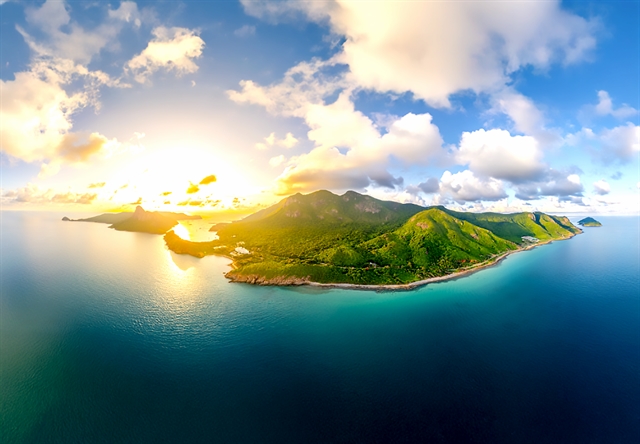
As 2025 draws to a close, Việt Nam’s conservation sector marks a milestone with Côn Đảo National Park in HCM City officially inscribed on the IUCN Green List for the 2025-30 period, recognising its effective and equitable protected-area management to global standards.
The listing not only brings pride to the locality but also reflects international recognition of sustained efforts to protect and restore the park’s unique forest-marine ecosystems, among the country’s most valuable natural assets.
A global benchmark for protected-area management
The IUCN Green List is widely regarded as the “gold standard” for assessing the performance of protected areas worldwide.
To qualify, sites must meet strict criteria covering transparent governance, science-based planning, biodiversity conservation and meaningful community participation.
Côn Đảo National Park officially received its Green List certificate on November 29, marking a significant moment for Việt Nam’s forestry and marine conservation sectors.
The recognition reinforces the park’s standing among the world’s best-managed protected areas and opens new opportunities to link conservation with sustainable development under its new administrative status within the city.
Vũ Ngọc Long, former director of the Southern Institute of Ecology, said Green List status should be viewed not as an endpoint but as the beginning of a new cycle of responsibility.
As the designation is reviewed every five years, management authorities must continuously improve conservation performance to retain international recognition.
Throughout 2025, forest and marine protection efforts at the park were intensified despite harsh weather and mounting climate change pressures. Rangers conducted 4,733 patrols, including 3,972 forest patrols and 761 marine patrols, helping prevent illegal activities and resource degradation.
Thanks to strict monitoring and comprehensive fire prevention measures, nearly 6,000 hectares of natural forest recorded no forest fires during the year – a notable achievement as many areas nationwide faced heightened risks due to prolonged heat.
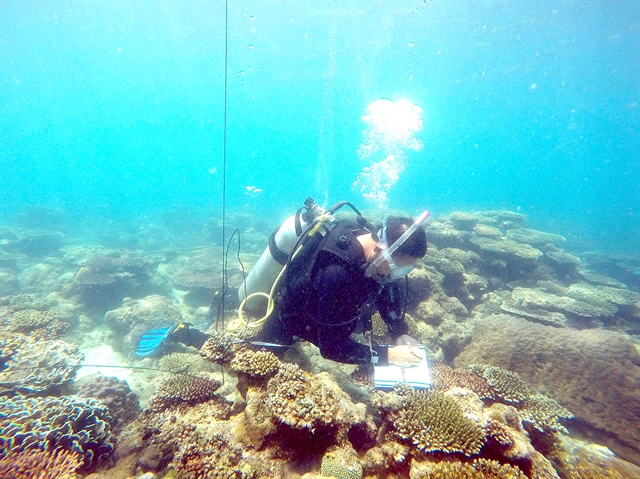
Scientific surveys reaffirmed the park’s exceptional biodiversity, documenting 18 of the 21 target animal species. Updated data now record 30 mammal species, 112 bird species and 54 reptile species within the park.
Recovering endangered species, restoring marine ecosystems
One of the most visible conservation successes at the park has been the strong recovery of sea turtle populations, a flagship and endangered species of the island ecosystem.
From early 2023 to November 2025, more than 2,100 nesting females were recorded, with 6,300 nests protected and over 604,000 eggs safeguarded. More than 436,000 hatchlings were released back into the wild.
Artificial incubation and release programmes for swiftlets have also shown encouraging early results, with 133 healthy fledglings returned to nature, signalling the gradual recovery of key ecological links.
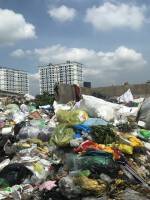
Alongside species conservation, the park stepped up efforts to combat ocean plastic pollution.
In 2025 alone, more than 310 cubic metres of plastic waste were collected from beaches, while over 2.4 tonnes of debris entangled in coral reefs were removed, helping restore underwater habitats.
A further 2,062 tonnes of waste were handled along eco-tourism routes and patrol paths, raising awareness among local communities and visitors.
Beyond Green List status, the park holds several international designations, including Ramsar Wetland of International Importance, ASEAN Heritage Park, and membership in the Indian Ocean-South-East Asian Marine Turtle Memorandum of Understanding (IOSEA).
With five natural carbon sinks and estimated carbon stocks of around 438,000 tonnes, the park is also considered a meaningful contributor to the country’s goal of net-zero emissions by 2050.
Its management board has completed a proposal on greenhouse gas emission reduction linked to a pilot carbon credit model, aligned with emerging green economy trends and aimed at mobilising additional funding for long-term conservation.

Bùi Minh Thạnh, vice chairman of the HCM City People’s Committee, said the Green List inscription was both a source of pride and a clear demonstration of the city’s commitment to nature conservation and sustainable development, enhancing its credibility with the international community.
Nguyễn Khắc Pho, director of the Côn Đảo National Park Management Board, said the Green List would not be just a title, but a reminder of our long-term responsibility to protect one of Việt Nam’s natural treasures.
“Côn Đảo’s journey shows that with strong political commitment, science-based management and community support, conservation and sustainable development can go hand in hand.”
Looking ahead to 2026, priorities would include maintaining Green List status through strict forest and marine protection, expanded environmental education, and further surveys of rare and endemic plant species to inform targeted conservation plans.
In parallel, the park would continue to develop high-quality eco-tourism by diversifying products and promoting experiential tours linked to environmental education.
Improving guide capacity, service standards and communication about forest-marine ecosystems would be key to ensuring tourism grows in harmony with conservation, he said.
Nguyễn Diệp – Huỳnh Sơn (VNS)