
Properly implemented low-emission rice production will not only help Việt Nam meet its climate commitments but also create new opportunities to build a sustainable, high-value national rice brand, according to Dr Nguyễn Đỗ Tuấn Anh, director of the International Cooperation Department at the Ministry of Agriculture and Environment.
“Reducing greenhouse gas emissions in agricultural production is no longer an option but has become a consistent strategic direction for Việt Nam in the context of intensifying global climate change,” Tuấn Anh told the workshop Focus on Việt Nam: Opportunities to Promote Low-Emission Rice in the Mekong Delta.
The event was organised by the ministry in collaboration with the International Rice Research Institute on January 23 in Hà Nội.
“For Việt Nam, one of the world’s leading rice exporters, transitioning to a green, low-emission and sustainable agricultural model is essential to maintaining long-term competitiveness,” he said.
The workshop took place as the world grapples with mounting challenges related to food security and climate change. The choice of Việt Nam as the focus of international discussions reflects growing confidence in the country’s role, potential and leadership capacity in global climate solutions, particularly in the rice sector.
At the COP26 conference, Việt Nam committed to achieving net-zero emissions by 2050. To realise this pledge, agriculture, one of the sectors most affected by climate change and a significant source of emissions, has been identified as a priority for transformation. Rice production plays a central role in this process, underpinning national food security and the livelihoods of millions of farmers.
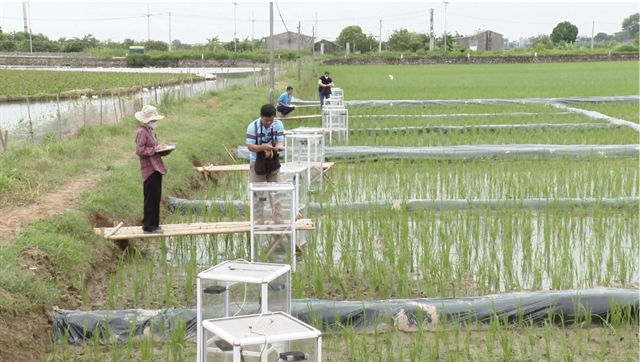
In recent years, the country has gradually shifted away from a production model focused on volume towards one that prioritises quality and added value. Climate-smart farming models that apply advanced water management, reduce inputs and expand low-emission rice production linked to sustainable livelihoods are increasingly being adopted, helping to enhance the position of Vietnamese rice in international markets.
Despite this progress, the transition to low-emission rice production still faces major challenges. These include small-scale production, high initial conversion costs, risks borne by farmers, the absence of a reliable system for measuring, reporting and verifying emissions and underdeveloped value chains and market linkages for low-emission rice.
At the same time, significant opportunities are emerging as global demand grows for green, responsible and traceable agricultural products. Việt Nam’s preferential financial and credit policies are also creating a more favourable environment to attract greater private sector participation in the low-emission rice value chain.
Measures such as expanding eligibility for preferential loans, raising unsecured lending limits and supporting investment in infrastructure, technology and processing have helped businesses, cooperatives and farmers reduce risks during the transition.
The private sector has been identified as a key driver in scaling up and sustaining pilot low-emission rice models. Experts say businesses have advantages in investment capacity, technological innovation, supply chain management and access to international markets, particularly those with stringent requirements for traceability, environmental certification and carbon emissions.
By participating in low-emission rice production, companies not only help cut greenhouse gas emissions but also generate added value through branded, high-quality products that meet sustainability standards.
To deepen private sector engagement, experts stressed the need to further refine the policy framework to reduce transaction costs, share risks and create incentives for long-term investment. Instruments such as green credit, credit guarantees, mechanisms to share benefits from carbon credits and hybrid financing models are seen as crucial to mobilising private resources for agricultural transformation.
Effective implementation of low-emission rice production, they added, will help Việt Nam meet increasingly strict international market requirements, raise farmers’ incomes and gradually build a national rice brand associated with green and sustainable growth.
(VNS)