

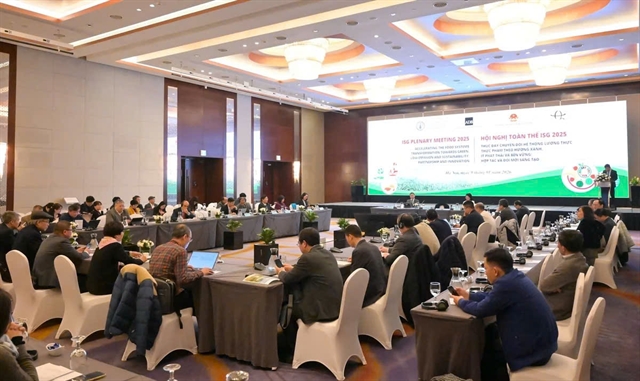
Việt Nam has launched a regional initiative to harmonise the regulation of biological pesticides across Southeast Asia as regional countries seek to reduce reliance on synthetic chemicals and make agriculture more climate-resilient.
The initiative was unveiled at a series of meetings in Hà Nội from January 6 to 8, bringing together regulators from ASEAN member states, international experts and industry representatives to discuss how biological plant protection products can be managed, tested and approved more consistently across the region.
The programme, coordinated by Việt Nam’s Plant Production and Protection Department in partnership with the ASEAN Biopesticide Efficacy Task Force and industry group CropLife Asia, aims to develop a common regulatory framework while allowing flexibility for national conditions.
Officials said the effort reflects growing pressure on governments to balance food security with environmental protection as climate change intensifies pest outbreaks and strains farming systems.
“Reducing dependence on synthetic chemicals and expanding biological solutions is no longer optional,” said the department’s director Nguyễn Quang Hiếu at the opening session.
Pham Quang Minh, a senior official at the ASEAN Secretariat, said biological pesticides were moving from the margins to the mainstream of pest management and climate adaptation.
“This is not about imposing a single regulatory model,” Minh said.
“It is about identifying common ground, building trust and gradually reducing fragmentation while respecting national sovereignty.”
Delegates reviewed existing national regulations and agreed on a roadmap for 2026–2028, focusing on shared definitions, science-based data requirements and capacity building for regulators.
The final day of the meetings broadened the discussion to Việt Nam’s domestic framework, with regulators, researchers and businesses examining how the country’s rules could be aligned with regional principles while remaining consistent with its long-term agricultural strategy to 2030 and beyond.
Participants compared ASEAN practices with regulatory systems in the EU, the US, Brazil, Japan and South Korea, examining issues ranging from product classification and field trials to residue management and biological risk assessment.
Tan Siang Hee, executive director of CropLife Asia, said biological products should be seen as complementary rather than a replacement for chemical pesticides.
He said the goal is to build a modern regulatory system that would allow different tools to work together safely and effectively, adding that greater regulatory harmonisation could help improve transparency and encourage innovation.
The ASEAN framework programme will run for 30 months, focusing on regulatory reviews, technical training and public-private cooperation.
Việt Nam intends to act as a bridge between ASEAN governments and industry, with an eventual aim of mutual recognition in product registration.
Việt Nam’s biological pesticide market was valued at about VNĐ880 billion (US$34 million) in 2025 and is expected to nearly double over the next decade, according to industry estimates.
The share of biological products in total pesticide use has risen steadily, particularly in the southeast and the Mekong Delta, as farmers respond to export market standards and environmental concerns.
Officials say easing technical requirements for biological products could accelerate adoption, giving farmers more options as the region’s agricultural model shifts under climate and ecological pressure.
(VNS)