
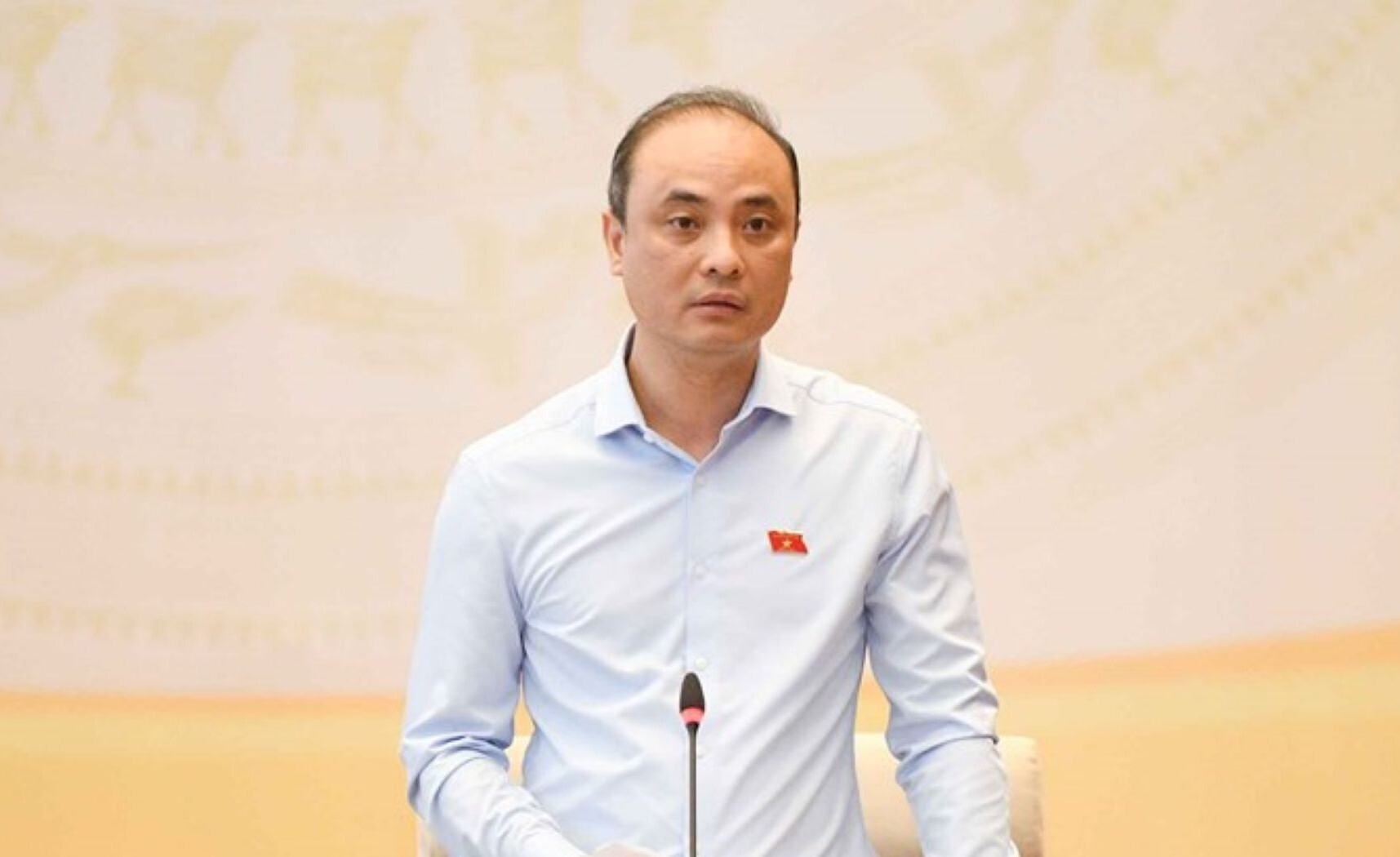
In an interview with the Newspaper Industry and Trade, Nguyen Phuong Tuan, Vice Chairman of the National Assembly’s Committee on Science, Technology and Environment, underscored the critical role of energy efficiency and conservation in Vietnam’s green transition.
Completing the legal framework
How do you assess the Ministry of Industry and Trade’s efforts in improving the institutional framework for the energy sector, particularly the amendment of the Law on Economical and Efficient Use of Energy, in the context of ensuring energy security and advancing the green transition?
Nguyen Phuong Tuan: – In 2025, the Government assigned the Ministry of Industry and Trade to take the lead in drafting several key legislative instruments, including the Law amending and supplementing the Law on Economical and Efficient Use of Energy; a National Assembly Resolution on mechanisms and policies for national energy development for the 2026 – 2030 period; and the Law on E-commerce. These are pivotal legal documents that institutionalize the Party’s and State’s socio-economic development orientations in the new phase.
Against the backdrop of increasingly pressing requirements to ensure energy security, enhance resource efficiency, and fulfill Net Zero commitments, the Ministry’s proactive review and revision of the Law on Economical and Efficient Use of Energy reflect a strong sense of responsibility, determination for reform, and commitment to improving the legal framework for sustainable development.
In terms of institutional quality, the Ministry has adopted a modern, forward-looking approach aligned with international trends, addressing both immediate practical needs and the country’s long-term development orientation. The draft law introduces several strategic policy pillars, notably the improvement of energy standards, technical regulations, and norms; the expansion of energy labeling to product groups and construction materials that significantly affect energy consumption over a building’s lifecycle; and the tightening of management over designated major energy-consuming establishments through enhanced data transparency, mandatory energy-saving plans, and periodic energy audits.
Notably, for the first time, the Energy Service Company (ESCO) model and energy performance contracting have been incorporated into law, establishing a clear legal corridor for the development of the energy services market. The draft also proposes the establishment of a Fund for Promoting Economical and Efficient Use of Energy, mobilization of green financial resources, and a stronger emphasis on digital transformation, smart metering, and a national energy database.
These orientations are closely aligned with the imperative of efficient energy use, demonstrating Vietnam’s proactive institutionalization of international emissions reduction commitments, and are consistent with global trends toward a green, low-carbon economy.

Advancing the net zero goal
How do you assess the strategic importance of economical and efficient energy use to national energy security and Vietnam’s Net Zero target?
– In the current phase of deep energy transition, economical and efficient energy use has become a strategic pillar in ensuring national energy security and realizing Vietnam’s Net Zero commitment. This is a cost-effective, sustainable solution that delivers immediate impact without requiring large-scale investments in new energy sources.
As electricity demand in Vietnam continues to grow rapidly, energy efficiency helps safeguard energy security by slowing load growth, reducing pressure on investments in power generation and grid infrastructure, and enhancing the resilience of the energy system during periods of supply stress. Every one percent of electricity saved is equivalent to billions of kilowatt-hours, contributing directly to system stability and reducing reliance on imported fuels.
At the same time, economical and efficient energy use is a fundamental foundation for achieving Net Zero. Lower energy consumption translates into reduced emissions from major industrial sectors such as steel, cement, chemicals, and textiles industries characterized by high carbon intensity.
Moreover, energy efficiency enhances the competitiveness of enterprises amid the growing prominence of ESG (Environmental, Social, and Governance) standards, the Carbon Border Adjustment Mechanism (CBAM), and green supply chain requirements, which are increasingly shaping the new rules of global trade.
By cutting production costs, improving operational efficiency, and meeting environmental requirements in international markets, enterprises that use energy efficiently gain a clear competitive advantage in trade and exports. This aligns with global development trends and plays a decisive role in building Vietnam’s green, low-carbon economy.
It can therefore be affirmed that economical and efficient energy use is the “key” for Vietnam to realize its Net Zero goal, enhance competitiveness, and move steadily toward sustainable development.
Communication as a driver of the green transition
In your view, what role does communication play in promoting economical and efficient energy use, and what should be done to further spread the spirit of the green transition?
– I believe communication plays a particularly important role in promoting economical and efficient energy use. Communication not only disseminates policies, but also helps transform awareness and behavior, while fostering a sense of social responsibility toward the green transition. In the current phase of sustainable development, communication has truly become a “soft driver” with broad and lasting influence.
Effective communication translates complex technical content into clear, accessible messages, linking energy efficiency to economic benefits and environmental responsibility. At the same time, highlighting pioneering models and best practices helps inspire businesses and communities to take concrete action.
To further amplify the spirit of the green transition, it is essential to strengthen multi-platform communication, enhance data-driven storytelling, honor exemplary models and leading enterprises, and integrate communication with community-based movements. In doing so, economical and efficient energy use will no longer be viewed merely as a regulatory obligation, but as a broad-based social movement contributing to national energy security.
Phuong Trang
At the 9th Session of the 15th National Assembly, the National Assembly passed the Law amending and supplementing a number of articles of the Law on Economical and Efficient Use of Energy. According to experts, this law provides a crucial foundation for promoting the green transition, accelerating the energy transition, and advancing economical and efficient energy use in Vietnam, thereby contributing to green growth and the reduction of greenhouse gas emissions.