
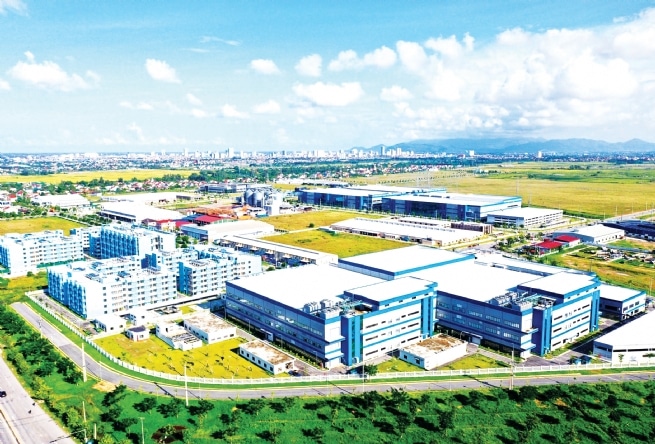
The answer matters. Increasingly investors and buyers are no longer drawn only by low costs or basic infrastructure. They are looking for something more: access to clean energy, transparent environmental data, circular production systems, and climate-resilient facilities.
This shift is already happening. At a recent consultation led by the Vietnam Chamber of Commerce and Industry (VCCI), enterprises emphasized that next-generation Foreign Direct Investment (FDI) is closely tied to green investment. In a highly competitive regional economy, upgrading industrial parks for low-carbon and climate-resilient production is no longer optional, it is essential for sustaining export-driven growth in the years ahead.
This transition is not just about environmental compliance. It is central to long-term competitiveness.
Vietnam has committed to achieving Net Zero by 2050. As major export markets introduce new rules, including carbon border measures, stricter emissions disclosure, and circular economy requirements, multinational companies are demanding renewable energy, resource efficiency, and verified emissions data from their suppliers.
Industrial parks that cannot meet these expectations risk being excluded from global value chains.
More efficient and climate-resilient industrial parks are also central to energy security. By reducing dependence on imported fuels and exposure to volatile energy prices, renewable energy and efficiency measures help ensure a stable and reliable power supply for long-term production.
UNDP’s work across Vietnam shows that the shift to green, smart, and resilient industrial parks is not only feasible but delivers clear economic and environmental benefits. These include lower operating costs, stronger competitiveness, improved market access, and increased investment. Practical solutions such as industrial symbiosis, energy efficient equipment, water reuse systems, better waste management, and renewable energy solutions like rooftop solar integrated with battery energy storage system (BESS) can significantly reduce costs for businesses.
In Hai Phong, UNDP supported a pilot on industrial wastewater reuse at DEEP C Industrial Zones. Designing optimal technology flowcharts and applying advanced membrane filtration technology, the system treats water so it can be safely reused for industrial cooling and cleaning solar panels. This reduces freshwater intake and wastewater discharge costs, and help companies meet the environmental standards increasingly demanded by global buyers.
A follow-up feasibility study for a full-scale project with a treatment capacity of 1,000 cubic meters per day will provide analysis on expenditures and technical and financial viability for investors.
The benefits of this transition are immediate. Circular production and energy efficiency reduce costs. Smart management systems build investor trust. Climate-proofed infrastructure protects assets and workers.
Digital tools, such as environmental monitoring, real-time emissions tracking, and climate risk assessments, enable industrial park managers to identify risks early, plan infrastructure investments more effectively, and demonstrate compliance with growing market expectations. This is increasingly critical as many industrial parks face rising exposure to storms, floods, heatwaves, and sea-level rise, which disrupt supply chains and drive up operating and insurance costs.
UNDP’s assessments show that combining these smart systems with climate-proofing measures, such as flood-resilient design, cooling solutions for heat stress, green buffers, and resilient transport links, can significantly reduce long-term economic losses, while protecting both workers and assets, strengthening resilience and investor confidence.
To accelerate this transition, three priorities stand out:
First, set clear national standards for green, smart, and climate-resilient industrial parks.
While a small number of leading industrial parks have demonstrated what is possible, national standards are needed to scale up these efforts across provinces. Aligning with international standards would strengthen bankability, lower compliance and financing costs, and help businesses integrate more easily into global value chains. Certification would also provide authorities with a practical tool to promote investment and monitor progress.
Second, create targeted incentives for businesses to go green.
Many businesses are willing to invest in cleaner technologies but face high upfront costs or lack technical expertise. Targeted support, such as green financing programs, technical support, tax incentives, and public-private partnerships can help overcome these barriers and unlock wider investment.
Third, strengthen partnership.
The transition requires coordinated planning, technology transfer, knowledge sharing, and innovation. Institutions like VCCI, industrial park authorities, business associations, and development agencies play an important role in connecting international experience with local needs.
UNDP will continue supporting Vietnam through providing targeted policy advice, piloting practical solutions, building capacity, and offering digital tools to help authorities and developers plan greener and more resilient industrial parks.
industrial parks have powered Vietnam’s growth for decades; now they must anchor its green transformation. By accelerating the shift to green, smart, and climate-resilient models, Vietnam can attract higher-quality investment, reduce climate risks, and stay competitive in global markets. With the right policy choices today, industrial parks can continue to drive productivity, exports, and sustainable growth for years to come.
Vu Thai Truong – UNDP Assistant Resident Representative in VietNam, Head of Climate Change and Environment Unit