

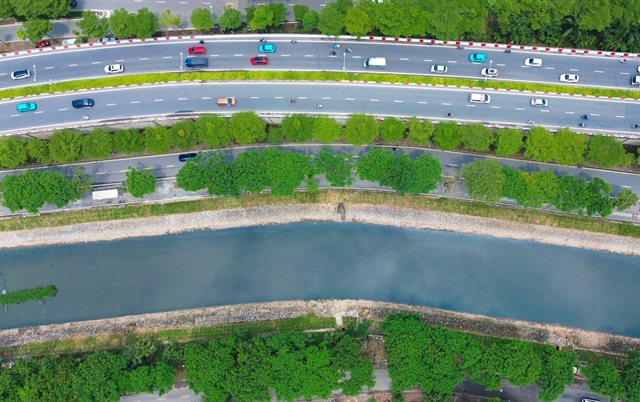
Just four months after the Yên Xá Wastewater Treatment Plant began operations, the environmental turnaround of Hà Nội’s Tô Lịch River is already clear to see.
Once notorious for its foul stench, the river has lost its offensive odour and its water quality is gradually being restored, marking a notable shift for one of the capital’s most troubled waterways.
According to representatives of the plant’s monitoring and operating unit, domestic wastewater from households is now collected through a dedicated underground sewer system and channelled directly to the facility for treatment before being pumped back into the river.
This closed-loop process has sharply reduced pollution compared with previous practices, under which untreated wastewater flowed straight into the river and was only intercepted further downstream.
Trương Quốc Bảo, Director of Hà Nội’s Yên Xá Wastewater Treatment System Project Management Board, told Việt Nam News that the plant was operating at a treatment capacity of about 240,000 cubic metres per day.
“This ensures the collection and treatment of all wastewater along the Tô Lịch River,” he said.
He added that alongside immediate and longer-term measures being urgently implemented by the city, the river was expected to be transformed into a clean and green waterway in the near future.
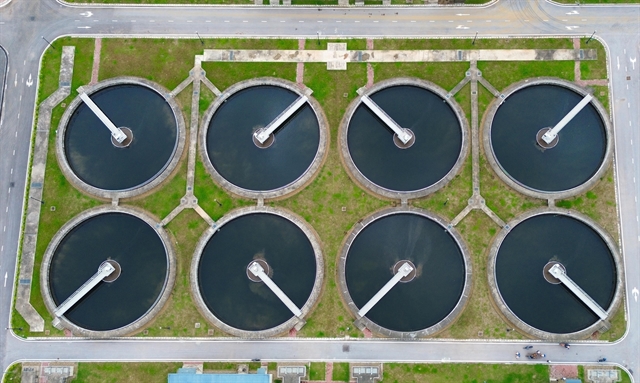
Previously, the Hà Nội People’s Committee officially inaugurated the plant, designed for a maximum capacity of 270,000 cu.m per day, on August 19.
At the time of commissioning, 245 discharge outlets along the Tô Lịch River had been connected to the facility, ensuring a daily treatment volume of between 200,000 and 230,000 cu.m.
The milestone marked a breakthrough in eliminating the vast quantities of untreated domestic wastewater that had long caused severe pollution in the river.
Looking ahead, Bảo said that once Package No. 49 of the Yên Xá wastewater system project is completed in 2026-27, pollution in the Lừ River would be addressed similarly.
Together with the S1 wastewater collection project, scheduled to break ground in 2026, the system would enable comprehensive treatment of four of Hà Nội’s main rivers: Tô Lịch, Lừ, Sét and Kim Ngưu.
Mitigating urban flooding
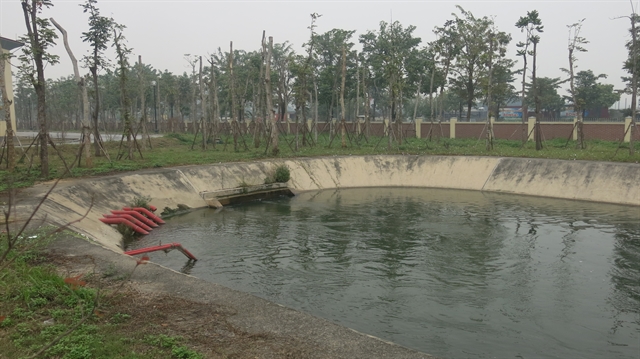
Beyond improving water quality, the plant has also played an important role in mitigating urban flooding.
During recent storms, it effectively supported flood prevention in inner-city areas such as Hoàng Quốc Việt and Cầu Giấy, with a rainwater collection and treatment capacity equivalent to 6.7 cu.m per second on rainy days, according to Bảo.
The plant is one of four major contract packages under Hà Nội’s Yên Xá Wastewater Treatment System Project.
The project is managed by the city’s Project Management Board for Technical Infrastructure and Agricultural Construction Investment, with funding provided by the Japan International Cooperation Agency (JICA).
Nguyễn Trọng Đông, Deputy Chairman of the capital People’s Committee, said at the inauguration ceremony that the plant was the central component of the Yên Xá wastewater treatment system, serving a drainage basin covering 4,874 hectares and 20 inner-city wards.
A key highlight of the project was the first-ever application in Hà Nội of advanced Japanese pipe-jacking technology, which would allow underground construction to be carried out safely without disrupting urban life.
The entire facility was designed, supervised and built by Japanese contractors and consultants and underwent rigorous testing before entering operation.
“This is a flagship environmental project,” Đông said.
It was expected to contribute to the revival of the capital’s historic rivers, including the Tô Lịch, Lừ and Sét, while improving the quality of life for millions of residents and supporting Hà Nội’s sustainable development.
From an international perspective, the project is already delivering visible benefits.
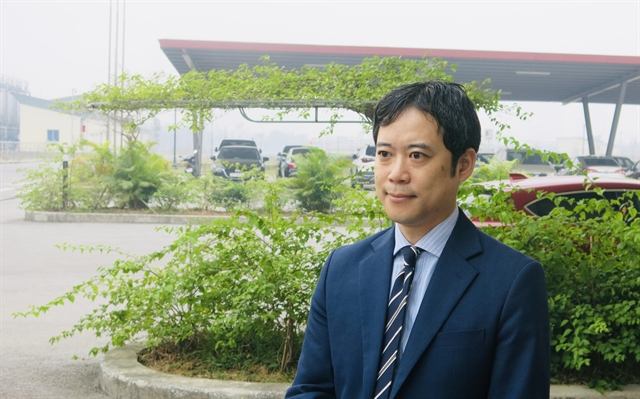
Shinoda Takanobu, Deputy Chief Representative of JICA in Việt Nam, told Việt Nam News that the Yên Xá plant was helping to restore Hà Nội’s rivers.
The facility collects and treats wastewater from areas within the Tô Lịch and Lừ river basins, significantly reducing the volume of untreated wastewater discharged directly into rivers and making a major contribution to improving the capital’s water environment, according to Takanobu.
Treated water from the plant is currently discharged into the Tô Lịch River and meets Việt Nam’s environmental standards.
The river’s water quality has improved markedly compared with the past.
Once operating at full capacity, the plant will be able to treat domestic wastewater generated by around one million city residents.
Beyond treatment, the project also opens the door to future water reuse initiatives.
In Japan, treated wastewater is commonly reused for agricultural irrigation, park landscaping, street cleaning or stored as an emergency water source for firefighting during natural disasters.
In the future, similar solutions are expected to be adopted in Việt Nam to promote water resource circulation, reduce environmental impacts and strengthen disaster resilience.
Nguyễn Hằng (VNS)