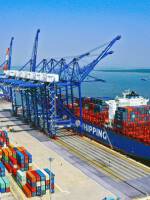


The term CBAM – the EU’s Carbon Border Adjustment Mechanism – is no longer unfamiliar within Vietnam’s business community. As Europe begins imposing carbon taxes on energy-intensive products, the issue is no longer purely environmental but increasingly one of cost.
If carbon footprints cannot be reduced around the country, export costs may well rise by tens to hundreds of millions of dollars each year. This means that price competitiveness – once a key advantage for many Vietnamese companies – could quickly erode.
As a result, environmental, social, and governance (ESG) principles are no longer just about corporate social responsibility. For international financial institutions, ESG metrics are now becoming a critical factor in assessing risk and the cost of capital.
Rising standards from Europe
At the “ESG as a Driver for Sustainable, Transparent and Inclusive Investment” session held within the recent EU-Vietnam Global Gateway Business and Investment Forum, Ms. Sunita Lukkhoo, Head of the European Investment Bank (EIB) for Southeast Asia and the Pacific, emphasized the growing importance of ESG in global investment decisions. “ESG is no longer about branding or voluntary reporting; it is about bankability, risk management, and long-term value creation,” she said. “Our approach has evolved over the years, and today it is really about long-term confidence,” she said.
Expanding on how ESG is operationalized in investment decisions, Ms. Lukkhoo explained that the EIB evaluates projects through multiple interlinked criteria to ensure long-term sustainability and resilience. “From the EIB’s perspective, there are four elements that we look at simultaneously,” she continued. “First is robust climate alignment and transition credibility, as any project we finance must clearly fit into a low-carbon future. This means having credible transition plans and avoiding lock-in to high-emission assets that could quickly become obsolete.”
She added that this approach reflects a broader institutional shift toward stricter climate standards. “At the EIB, we stopped financing elevated fossil fuel projects in 2019, and in 2021 were the first and only multilateral development bank to have all our operations fully Paris-aligned,” she said.
Beyond climate considerations, environmental and social safeguards are equally critical in mitigating investment risks. “Strong environmental and social safeguards are not a luxury, they are essential,” she noted, emphasizing that projects need to respect communities, protect nature, manage water and pollution responsibly, and ensure that fair labor practices are in place. “This is not about being overly cautious, but about avoiding real-world risks, because when issues arise, whether community opposition, legal challenges, reputational damage, or cost overruns, they can derail even very promising investments.”
Weak ESG performance remains one of the most common reasons projects fail. In addition, climate resilience has now become a fundamental requirement rather than an optional consideration. “Climate risk is no longer abstract,” she said. “If resilience is not built in from the beginning, the project is simply not bankable.”
Finally, beyond sustainability and risk management, projects must also demonstrate clear economic value and measurable impact. Strong economic fundamentals remain essential, and investors increasingly expect clarity on impact and outcomes. Transparency builds trust and lowers financial risk.
Ms. Lukkhoo also noted that the EIB is continuing to refine its frameworks to better assess and track these outcomes. “Ideally, we use our additionality and impact measurement framework, and we are also developing specific climate and systemic results metrics to embed in our projects with our partners,” she explained.
Meanwhile, Mr. David Ambadar, Project Director at GIZ Vietnam, pointed to Europe’s experience as a reference for how ESG can be effectively implemented at scale. “The European experience shows that ESG is driven by several key elements,” he told the Forum. “First, you need a clear regulatory framework, and with that comes greater transparency. Another crucial factor has been incentives – strong incentives to help projects overcome initial hurdles, followed by additional mechanisms and instruments such as financial guarantees.”
He added that beyond policy and financial tools, a further important element is public awareness of the challenges relating to climate change and energy. Energy security, ultimately, means investing in renewables. Combined with market pressure, these factors have pushed Europe to where it stands today.
From a policy perspective, he went on, Vietnam needs to continue closing the gap between its strong policy ambitions and actual implementation.
Financial factors matter
On the incentive side, Mr. Ambadar pointed to the need for more targeted mechanisms to support early-stage green projects. He suggested that moving forward with the proposed 2 per cent incentives, while building on existing efforts, could help accelerate implementation. At the same time, clearer regulations and more detailed guidance will be essential to translate policy ambition into practice, alongside additional fiscal and monetary support.
He also underscored the importance of reducing financial risks to unlock greater private sector participation. Expanding de-risking instruments, such as guarantees and first-loss structures, would make green projects more attractive and viable for investors.
More broadly, he emphasized that the challenge extends beyond promoting sustainability. Projects must meet the expectations of both investors and lenders, with the ultimate goal of moving initiatives from being merely “worthy” to becoming truly “financeable.”
From a banking perspective, Ms. Nguyen Ngoc Hai Thanh, Senior Expert in Corporate Strategy and Partnership Management at Techcombank, pointed out that while initial steps toward green finance have been taken, significant challenges remain on both the supply and demand sides.
Drawing on feedback from small and medium-sized enterprises (SMEs), she noted that the current stage reflects only the “necessary conditions” for green finance, while more fundamental barriers, both within businesses and the broader institutional framework, still need to be addressed to reach “sufficient conditions.”
For enterprises, access to green finance begins with their ability to clearly define and validate projects. Businesses must understand what they aim to achieve and how their plans align with green standards. While many companies have long-term ambitions, the key challenge lies in demonstrating that projects meet recognized green criteria, an essential step before financing can be unlocked.
In this context, Ms. Thanh highlighted the evolving role of banks, which are increasingly expected to go beyond capital provision and take on a more active advisory function, particularly for SMEs that often lack the resources to structure green projects from the outset. In response, Techcombank is developing an AI-powered tool designed to support businesses based on financial reports and initial project descriptions.
The tool will offer a preliminary, standardized assessment aligned with Vietnam’s green taxonomy, enabling companies to gauge the “green potential” of their projects and how well they meet the criteria under the Prime Minister’s Decision No. 21/2025/QD-TTg on environmental criteria and certification of investment projects under the green taxonomy. Beyond this initial screening, the bank aims to work more closely with businesses, guiding them through the process of aligning with standards and accessing government support and green financing mechanisms.
Ultimately, Ms. Thanh emphasized that the challenge is not only to identify green projects but to ensure they are both sustainable and financially viable, turning them into initiatives that deliver real, measurable value.
Anh Hoang