
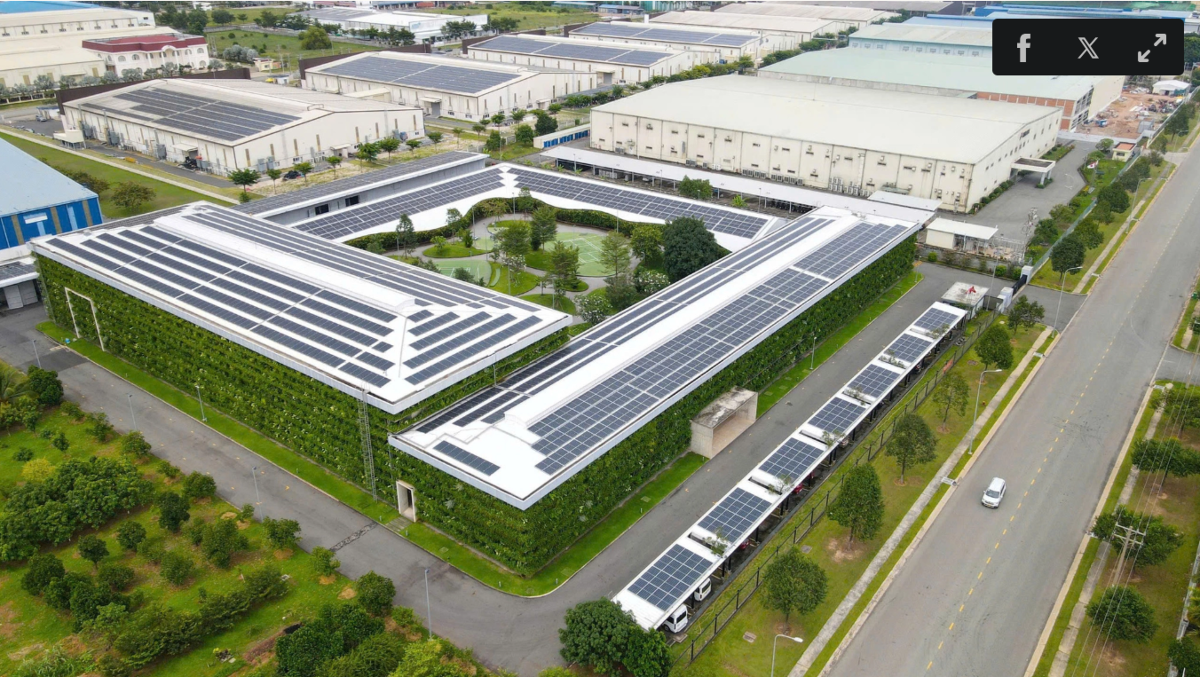
Ho Chi Minh City is finalising a draft resolution on criteria for eco-industrial parks and industrial clusters, along with support mechanisms to help existing facilities transition to the new model.
The draft regulation introduces not only environmental requirements but also quantitative criteria for resource efficiency, industrial symbiosis, shared infrastructure and the proportion of eco-friendly businesses. It proposes a roadmap to convert 10 existing industrial parks and three industrial clusters into eco-industrial models by 2045, supported by financial incentives and reimbursement obligations for entities that fail to meet their commitments.
To be qualified as an eco-industrial business, companies must demonstrate compliance over the two years before registration in seven areas: investment, enterprise operations, construction, land, environmental protection, fire prevention and control, and labour.
For resource efficiency, businesses must implement at least three measures covering resource efficiency, cleaner production or the circular economy. Each measure must reduce the use of raw materials, water, energy or chemicals by at least 5%. Alternatively, businesses must demonstrate at least a 5% reduction in waste, scrap or environmental emissions.
For new investors, according to the draft, the simple 5% savings threshold would be replaced by a requirement to apply the best available techniques (BAT) used in developed countries.
For eco-industrial clusters, at least 23% of land must be allocated to greenery, transport, shared technical infrastructure and social infrastructure. Newly developed clusters must reserve at least 12% for green space. Each cluster must have at least one industrial symbiosis activity, with participating businesses applying appropriate ISO management systems.
At least 10% of businesses operating in a cluster must meet eco-business criteria, or more than 15% must implement cleaner production solutions. Clusters must also provide accommodation, services and public amenities for workers.
For eco-industrial parks, the requirements are higher. At least 25% of land must be allocated to greenery, transport and shared technical and social infrastructure, rising to 28% for newly developed parks. Green space must account for at least 12%, while social infrastructure must make up at least 2%.
Each industrial park must have at least three industrial symbiosis activities and apply an appropriate ISO management system. At least 25% of businesses must implement resource-efficiency, cleaner-production or circular-economy measures and demonstrate savings in materials, energy, chemicals or waste. Alternatively, at least 10% of businesses must meet eco-business standards.
Nguyet Ha