
The 14th Communist Party of Việt Nam Central Committee (CPVCC) has identified environmental protection and climate change adaptation as one of the pillars of Việt Nam’s new development model.
The third plenum of the 14th CPVCC last week reached consensus that in the new era, environmental protection and climate action must shift decisively from responding to and remedying the consequences of disasters to proactively identifying, forecasting and preventing risks at an early stage, while strengthening the country’s resilience to both traditional and non-traditional threats and their cascading impacts.
The strategic shift has been widely welcomed by environmental experts as a major step toward sustainable national development.
Addressing the opening session of the plenum, Party General Secretary and State President Tô Lâm highlighted four strategic transformations aimed at removing development bottlenecks and creating new growth drivers.
One of them is the transition from responding to individual risks to proactively preventing threats, enhancing resilience and safeguarding the country.
The message was reaffirmed at the closing session, where the Party Central Committee adopted a conclusion on environmental protection and proactive climate adaptation in the new era following a review of Resolution No. 24-NQ/TW issued in 2013.
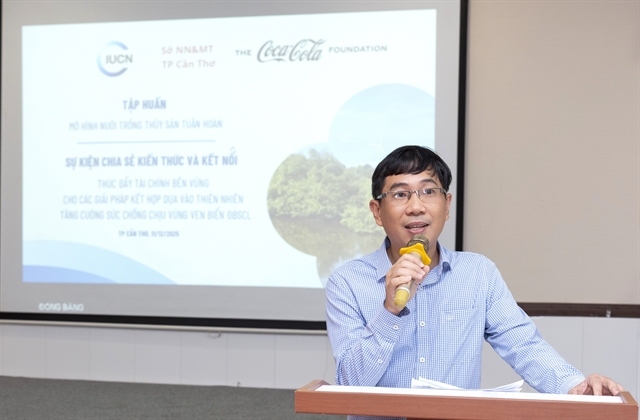
Dr Nguyễn Thanh Phong, Manager of the Mekong Delta Programme at the International Union for Conservation of Nature (IUCN), described the Party leadership’s message as particularly significant.
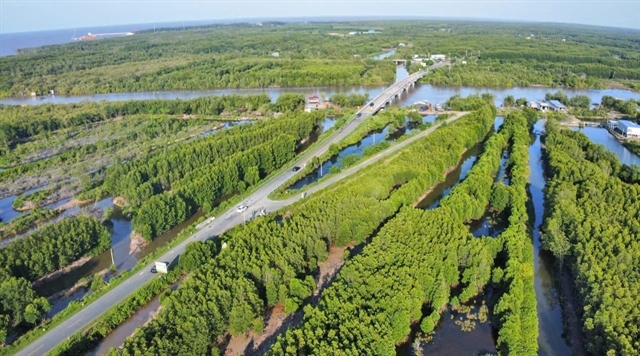
He noted that coastal provinces in the Mekong Delta have long suffered from sea-level rise, coastal erosion, land subsidence and mangrove loss. Mangrove forests serve as natural barriers against extreme weather while providing breeding grounds for commercially valuable aquatic species.
“The degradation of mangrove forests not only increases disaster risks but also threatens livelihoods, food security and long-term economic sustainability,” Phong said.
He said the increasingly evident impacts of climate change have underscored the importance of mangrove forests for livelihoods, environmental protection and sustainable development. Consequently, localities have intensified mangrove restoration efforts with support from scientists, businesses, local communities and international cooperation.
According to him, the most successful climate adaptation projects are those that simultaneously improve climate resilience, enhance local livelihoods and restore natural ecosystems, reflecting the essence of sustainable development and aligning with Việt Nam’s new development thinking.
He stressed that climate adaptation in the Mekong Delta should become a regional development strategy rather than the responsibility of individual provinces or sectors alone.
From recovery to prevention
The message emphasised at the third plenum of the 14th CPVCC was that environmental protection and proactive climate adaptation must shift decisively from disaster recovery to prevention, adaptation and restoration.
The message reflects a consistent guiding principle repeatedly underscored by Party General Secretary and State President Tô Lâm at previous Party Central Committee meetings, review sessions on the implementation of Resolution No. 24-NQ/TW and meetings with the agriculture and environment sector as well as other ministries and agencies.
The Party’s new orientation has already been translated into concrete programmes, focusing on ecosystem restoration, climate adaptation and livelihood improvement.
Between 2017 and 2025, Việt Nam implemented a nearly VNĐ600 billion (US$23 million) project to protect coastal areas and restore mangrove belts in the Mekong Delta.
The project helped develop and protect around 2,800 hectares of mangrove forests while upgrading 19 kilometres of sea dikes and wave barriers.
In Cà Mau Province, an IUCN-supported project has planted more than 80,000 mangrove trees across 18 hectares and plans to plant another 80,000 trees on 19 hectares this year.
Alongside mangrove restoration, localities have expanded climate-resilient aquaculture models, including shrimp-forest farming, shrimp-rice cultivation and integrated multi-species farming under mangrove canopies.
Việt Nam is also implementing a sustainable aquaculture development plan for the Mekong Delta through 2030 with a budget of about VNĐ3.4 trillion, targeting 720,000 hectares of brackish-water shrimp farming adapted to changing climate conditions.
Dr Phạm Trọng Thịnh, a climate change expert and former deputy director of the Southern Sub-Institute of Forest Inventory and Planning, said improving resilience and adaptive capacity should remain the top priority in the Mekong Delta.
He called for smarter agriculture, sustainable forest management, climate-resilient infrastructure, improved disaster forecasting and stronger protection of people’s lives and property.
Dr Nguyễn Thanh Phong said integrating nature-based solutions into development planning, technological innovation and financing mechanisms will help Việt Nam not only reduce climate risks but also build a competitive green growth model over the long term.
“The message from the third plenum is clear. Environmental protection and climate change adaptation are no longer only supporting policies for economic development,” he said.
“They have become an integral part of Việt Nam’s national development capacity and competitiveness in the new era.”
(VNS)