

The history of carbon exchanges is closely tied to the development of the global carbon market, beginning with pioneering carbon finance initiatives in the late 1980s. The first major milestone came with the adoption of the Kyoto Protocol in 1997, which established the Clean Development Mechanism (CDM), providing the legal foundation for trading emission reduction credits internationally.
Taking shape
The 2003-2005 period marked the birth of the world’s first carbon exchanges. In 2003, the Chicago Climate Exchange (CCX) was launched in the US. The most significant milestone followed in 2005, when the EU Emissions Trading System (EU ETS) officially began operations. As the world’s first multinational emissions trading system, it remains the oldest and largest compliance carbon market.
Throughout 2005, a series of European exchanges were established to support the EU ETS. Nord Pool was among the first, launching in the Nordic region in February 2005, followed by Germany’s European Energy Exchange (EEX), the European Climate Exchange (ECX) in Amsterdam, and platforms including Climex, Powernext, and EXAA. These exchanges offered products ranging from spot transactions to futures contracts, creating the world’s first dedicated carbon trading infrastructure.
From 2013 to 2014, China launched pilot carbon trading programs in seven jurisdictions before officially introducing its national carbon market in 2021. In South Korea, the Korea Exchange (KRX) has operated the trading platform for the Korea Emissions Trading Scheme (K-ETS) since 2015.
In the voluntary carbon market, Singapore’s Climate Impact X (CIX) began trading carbon credits in June 2023. Malaysia’s Bursa Carbon Exchange (BCX) was launched by Bursa Malaysia in December 2022, while Japan introduced the J-Credit exchange on the Tokyo Stock Exchange in October 2023.
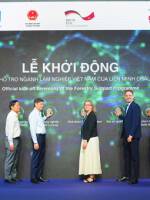
In Vietnam, the country’s carbon exchange was officially launched on June 29, 2026, at the Hanoi Stock Exchange (HNX).
The 2020s have marked the maturation of carbon markets, driven by three key trends: the adoption of digital technologies such as blockchain and AI to improve transparency and reduce costs; greater cross-border connectivity between exchanges; and increasing integration between compliance and voluntary carbon markets.
According to the ICAP 2026 report, 41 ETSs were in operation worldwide in 2026, covering 26 per cent of global greenhouse gas emissions, with another 16 systems under development.
South Korea: A decade of evolution
As East Asia’s first mandatory emissions trading system, K-ETS has evolved over the past decade from a thinly-traded market into one of the world’s leading carbon markets, offering valuable lessons for emerging exchanges.
Launched in 2015, K-ETS initially covered over 600 companies across eight major industries, representing about 73.5 per cent of South Korea’s greenhouse gas emissions. Its early years, however, were marked by low liquidity and limited trading experience.
The government began reforming the system in 2018 by introducing auctions for 3 per cent of allowances and gradually shifting allocations toward benchmarking. A major turning point came in April 2020, when financial institutions and brokerage firms were allowed into the secondary market. The first five securities firms joined as market makers, helping boost annual trading volume to nearly 90 million tons by 2023.
The market continued to mature during 2021-2025, expanding to more than 815 regulated entities while maintaining coverage of roughly 73.5 per cent of national emissions. The auction share rose to 10 per cent and banking and borrowing rules were refined to improve liquidity. Though an oversupply of allowances caused by errors in energy statistics temporarily weakened carbon prices, the government corrected the data in 2024 and introduced additional market stabilization measures.
Further reforms came with the Phase 4 Allocation Plan (2026-2030), announced in November 2025. The plan introduced the Korean Market Stability Reserve (K-MSR), modeled on the EU’s Market Stability Reserve, while gradually increasing auctioned allowances, with the power sector expected to reach a 50 per cent auction rate by 2030.
A decade on, K-ETS covers nearly 74 per cent of South Korea’s emissions and more than 815 companies, making it the world’s second-largest carbon market and a regional benchmark. Its experience shows that phased reforms, broader market participation, effective stabilization mechanisms, and a clear separation between trading and registry-settlement functions are critical to building a successful carbon exchange.
China: From pilot to powerhouse
Unlike South Korea’s nationwide rollout, China took a more gradual approach, testing regional carbon markets before launching a national system. In 2011, the National Development and Reform Commission (NDRC) approved pilot carbon markets in seven jurisdictions – Beijing, Tianjin, Shanghai, Guangdong, Shenzhen, Hubei, and Chongqing. Trading began in 2013, allowing authorities to test allocation methods, develop monitoring, reporting, and verification (MRV) systems, and build operational experience.
After nearly a decade of preparation, China’s national carbon market officially launched on July 16, 2021, through the Shanghai Environment and Energy Exchange. Initially covering about 2,200 coal-fired power companies, the market included more than 5.1 billion tons of CO2 emissions annually – roughly 9 per cent of global emissions – making it the world’s largest carbon market by emissions coverage.
Unlike the EU ETS, which operates under an absolute emissions cap, China’s system uses an emissions intensity-based approach, with allowances determined by actual production rather than a fixed cap. Companies receive 70 per cent of their allowances in advance based on the previous year’s output, with allocations later adjusted to reflect actual production.
Another defining feature is the separation of the market’s core functions. The national registry is based in Hubei, trading takes place in Shanghai, and the Ministry of Ecology and Environment oversees market administration, helping improve transparency and reduce conflicts of interest.
By 2025, the market had added the steel, cement, and aluminum sectors, increasing participation to more than 3,300 companies and covering about 60 per cent of China’s emissions.
Lessons for emerging markets
The experience of South Korea’s K-ETS and China’s national carbon market offers several lessons for newly-established carbon exchanges.
First, emerging markets often adopt emissions intensity-based allocation rather than absolute emissions caps. The approach provides greater flexibility by adjusting allowances to actual production, making it better suited to economies that have yet to reach peak emissions. Over time, allocation should also shift from grandfathering to benchmarking to strengthen incentives for emissions reductions and reduce market distortions.
A gradual transition from free allocation to auctions is equally important. Both South Korea and China began with almost entirely free allocations before steadily expanding auctions to strengthen price signals and generate public revenue. Prolonged reliance on free allocation risks weakening incentives for companies to cut emissions.
Low liquidity is another common challenge in the early stages of market development. South Korea’s experience highlights the value of broadening market participation by allowing financial institutions and securities firms into the market. Market makers have also played a key role in improving liquidity and facilitating price discovery.
Market stabilization mechanisms should be introduced early. The EU ETS has demonstrated the effectiveness of its Market Stability Reserve (MSR), while South Korea is rolling out its own K-MSR. China, by contrast, has yet to establish a comparable mechanism, contributing to relatively low carbon prices that may not sufficiently encourage emissions reduction investments.
A transparent MRV system is another cornerstone of a credible carbon market and a prerequisite for international integration. Transparent data and processes help build investor confidence, while technologies such as blockchain are expected to further improve transparency and reduce operating costs.
Finally, new carbon exchanges should be designed with international connectivity in mind. Clear rules on carbon credit ownership and export procedures can provide a competitive advantage, while mechanisms such as CORSIA (the Carbon Offsetting and Reduction Scheme for International Aviation) and Article 6 of the Paris Agreement are creating significant opportunities for countries with well-developed regulatory frameworks.
Huy Nguyen