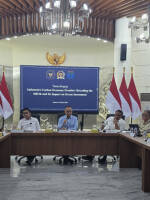

Associate Professor, Dr. Pham Anh Tuan, former Director of the Institute of Agricultural Mechanisation and Post-Harvest Technology under the Ministry of Agriculture and Environment, believed that the agricultural sector currently faces several limitations that need to be overcome, such as fragmented production, high post-harvest losses, and low added value. In addition, the requirements of domestic and export markets regarding origin transparency and emission reduction are becoming increasingly stringent.
The reality demands that the dual transformation process in agriculture be accelerated, combining digital transformation and green transformation. This is both a solution to increase labor productivity and an important tool for enhancing competitiveness.
The integration of digital transformation (data, automation, production connectivity) with green transformation (emission reduction, circular economy, ecosystem formation) is becoming an inevitable trend for the agricultural sector in the new context.
Globally, developed countries are strongly shifting towards data-driven and low-emission agriculture, also known as precision agriculture or Net Zero agriculture. This is agriculture managed based on data analysis, implementing a smart and closed supply chain from production to consumption.
According to the Institute of Agricultural Mechanisation and Post-Harvest Technology, the core technologies currently used by many countries around the world to carry out digital transformation in agriculture are artificial intelligence (AI) and the Internet of Things (IoT).
These technologies can predict yields, diseases, weather, identify pests and diseases, and optimise farming decisions; Sharing real-time environmental sensor information (soil, water, climate) helps reduce reliance on experience and improve accuracy in production.
Furthermore, modern agriculture prioritises the use of robots and automation to reduce labour costs, implements traceability from the source to ensure supply chain transparency, and utilises big data technology for analysis, decision-making support, and production management.
High-tech production saves costs, labor, resources, and product value, while positively impacting consumer health and the environment.
Professor, Dr. Mac Quoc Anh, Vice President and General Secretary of the Ha Noi Small and Medium Enterprises Association, noted that the dual transformation presents both opportunities and pressures for SMEs.
According to statistics, in Ha Noi, 97% of businesses are SMEs, with 60% applying digital technology at a basic level; 5% are undergoing comprehensive digital transformation; Approximately 10% of green initiatives are actually implemented. This indicates that businesses have started, but are doing so slowly and hesitantly.
Ha Phan Kim Nguyet, Founder and CEO of UPGREEN Viet Nam, believed that for businesses to successfully achieve a dual transformation, the circular design model combined with digital traceability needs to begin with specific products or processes.
In addition, regulatory agencies need to quickly develop a national standard framework for sustainable business development (ESG) and a suitable legal framework.
Agriculture is a key area in the digital transformation goals approved by the Prime Minister in Decision No. 749/QD-TTg dated June 3, 2020, on the “National Digital Transformation Programme to 2025, with a vision to 2030”.
After six years of implementation, Viet Nam’s agricultural sector has achieved certain results. Some large farms have fully applied digitalisation in production and implemented Net Zero; Product traceability technology is being gradually implemented for some essential goods.
However, these results are only the beginning. While many countries have moved to the automation stage and widely adopted technology from production to traceability in agriculture, Viet Nam is still mainly in the stage of digitising individual stages and connecting to the market, and has not yet formed a synchronised dual transformation ecosystem.
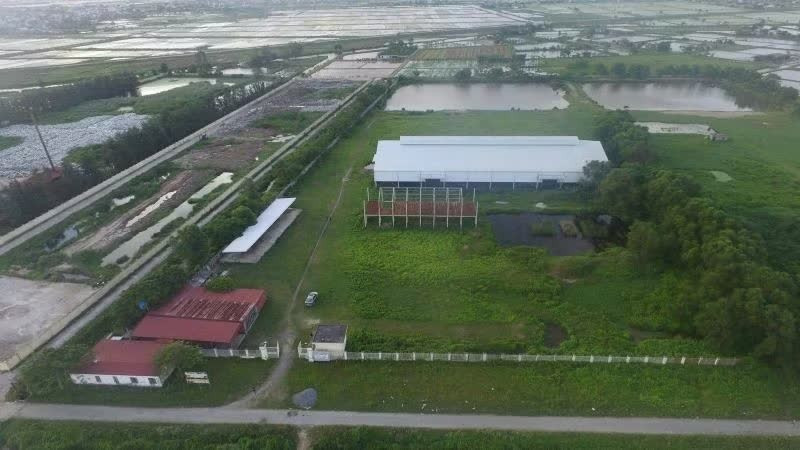
The formation of concentrated, low-emission smart production models is still unclear. Although there are many large specialised farming areas, fruit-growing regions, and livestock farms, most still operate using traditional methods. Besides the confusion in accessing regulations and technology, challenges include small-scale production, inadequate and fragmented infrastructure, a shortage of human resources, and especially high investment costs.
The reality demands that the dual transformation in agriculture be accelerated. Viet Nam’s agricultural sector, which is traditionally based on traditional production methods, needs to shift to smart and precise management.
This requires the establishment of large-scale production areas; the application of technology and automation in production forecasting and production area management, combined with market connectivity and analysis; and the formation and operation of value chains for products through data platforms, traceability, and e-commerce.
In particular, post-harvest preservation and processing technologies, which bring the greatest value to agricultural products, must be prioritised for significant investment.
Along with technological investment, it is necessary to continue improving mechanisms and policies to create incentives for businesses and people to participate in the dual transformation.
First, it is necessary to build and operate a green credit incentive mechanism; develop a carbon market; build and standardise a green-digital standards system; and complete and connect land and climate databases with specialised databases, creating a foundation for smart governance and production.
In addition, it is necessary to promote investment in science, technology, and innovation through the development of core technologies, automation, and biotechnology; train high-quality human resources; strengthen mechanisms to support and commission scientific research based on practical problems in the industry and market data research; and build an innovation ecosystem in agriculture based on strengthening linkages and technology transfer between management agencies, businesses, scientists, and farmers.
Forming innovation clusters, promoting the leading role of businesses, and expanding international cooperation are essential to accelerating the dual transformation process.
Nam Phong