
Using natural gas in industry is emerging as a key solution to promote green and sustainable production towards the goal of achieving net zero by 2050, experts said at a workshop held on Thursday in Hà Nội.
The workshop was organised by the Vietnam Clean Energy Association (VCEA) as Việt Nam steps up efforts to advance the energy transition and implement its climate commitments.
VCEA President Mai Duy Thiện said the green energy transition is no longer optional but a mandatory requirement as environmental standards become increasingly stringent.
It is inevitable for Việt Nam to move from a growth model heavily reliant on fossil fuels to a green growth pathway, Thiện said, adding that the transition is essential to fulfil international commitments, ensure energy security and enhance national competitiveness.
He cited energy outlooks showing that Việt Nam’s energy demand, especially in industry, will increase sharply, placing significant pressure on supply systems as well as emissions reduction goals.
At the same time, Việt Nam is among the countries most vulnerable to climate change, with economic losses estimated at around 3 per cent of gross domestic product per year, heightening the need to restructure the energy system to be greener, cleaner and more sustainable, he stressed.
Thiện noted that natural gas is regarded in many countries as a critical transition fuel thanks to its lower emissions compared with coal and oil and its ability to improve overall energy efficiency.
“Wider use of natural gas in industrial production will help not only reduce emissions and improve the environment but also create conditions for the integration of new energy technologies,” he said.
According to Nguyễn Khắc Quyền, Deputy Director of the Vietnam Institute of Strategy and Policy for Industry and Trade, natural gas will continue to play an important transition role as domestic gas output trends downward while demand for gas in power generation and industry keeps rising.
Việt Nam currently exploits gas from 26 oil and gas fields, with peak output recorded in the 2010–15 period, but production has fallen sharply since 2016. Output dropped to about 5.95–8.08 billion cubic metres during 2021–25, forcing the country to gradually expand imports of liquefied natural gas, with the first LNG cargo arriving at Thị Vải Port in June 2023.
PV Gas in January signed its first long-term LNG contract with Shell for the 2027–31 period to secure stable medium- and long-term gas supplies.
At the workshop, experts also pointed to major challenges, including declining domestic gas resources, growing dependence on imported LNG, underdeveloped gas and LNG infrastructure and policy mechanisms that have yet to keep pace with market development.
They said the use of natural gas should be promoted in non-power industrial production alongside preparations to integrate lower-emission fuels such as green gas and hydrogen.
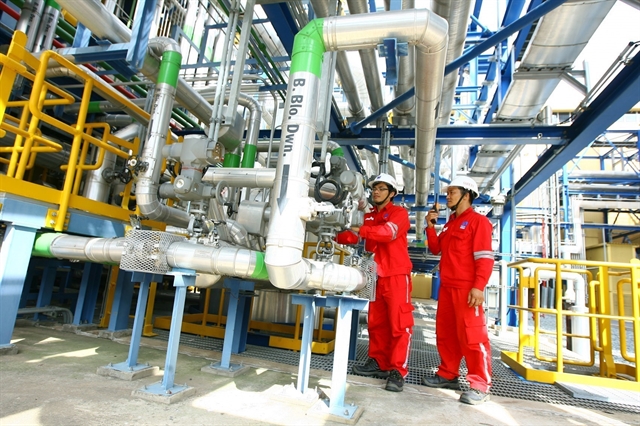
Nguyễn Quốc Thập, President of the Vietnam Petroleum Association, said connectivity between gas infrastructure and industrial parks and economic zones is critical to promote green industry and enhance national competitiveness.
He noted that current gas infrastructure is largely designed to serve power plants and fertiliser production, while direct links with industrial parks remain limited.
Thập called for synchronised development of gas, power and industrial park infrastructure, including the installation of dedicated pipelines, satellite LNG systems and integrated energy centres, stressing that gas infrastructure should be treated as an essential facility of industrial and economic zones.
It is also necessary to develop public-private partnership mechanisms and long-term gas purchase agreements to promote the use of natural gas in industry, he added.
(VNS)