
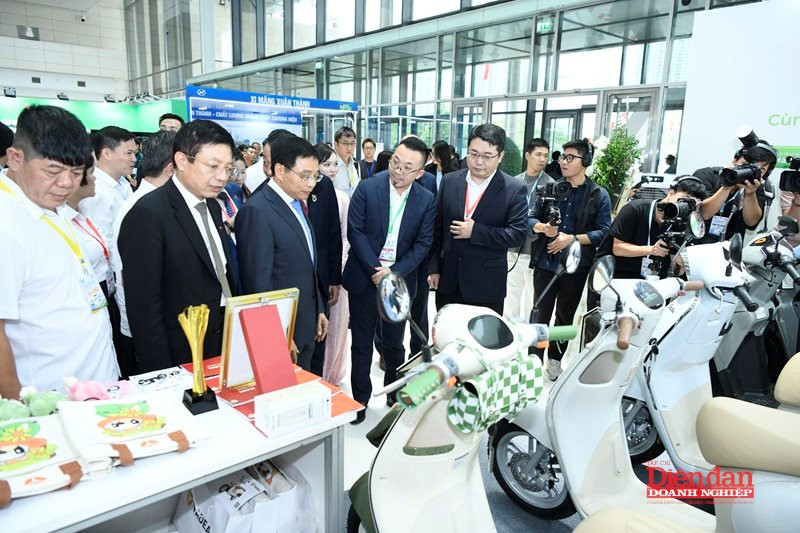
To support this objective, the Vietnam Chamber of Commerce and Industry (VCCI), via the Vietnam Business Council for Sustainable Development (VBCSD), recently partnered with key partners to successfully host the “World Energy and Environment – Vietnam” 2026 Forum, themed “Vietnam’s Pathway to Net Zero”.
A strategic choice
Speaking at the forum, VCCI Vice President and VBCSD Chairman Nguyen Quang Vinh noted that Net Zero is rapidly becoming the new benchmark for national and corporate competitiveness, profoundly impacting investment flows, supply chains, and global trade.
For Vietnam, achieving Net Zero is not merely about fulfilling international commitments; it is a strategic choice to elevate the quality of economic growth, bolster energy security, and enhance overall economic resilience.
“We have chosen the pathway to Net Zero not because it is easy, but because it is the right path for the future of Vietnam and the world,” Mr Vinh affirmed.
Echoing this sentiment, John Rockhold, Chairman of the Vietnam Business Forum (VBF)’s Power and Energy Working Group and Chairman of Pacific Rim Investment & Management, argued that businesses should view the carbon market as an opportunity to carve out a competitive edge rather than a regulatory burden.
According to Mr Rockhold, companies that take the initiative to build capacity in carbon management, conduct emissions inventories, optimise operations, and trade carbon credits will enjoy a distinct competitive advantage in the coming years. This will become increasingly evident not only domestically but also in export markets as carbon trade barriers multiply.
“Vietnam also boasts significant natural advantages to harness ‘blue carbon’ from its mangrove ecosystems, protecting the environment while generating economic value and carbon credits,” Mr Rockhold said. “This presents a golden opportunity for Vietnam to restructure its economy, attract high-quality investment, safeguard the environment for future generations, and cement its position as a responsible nation on the global stage.”
Empowering the business community
Deputy Prime Minister Nguyen Van Thang noted that Vietnam is entering a new phase of development where energy security, green transition, and national competitiveness have become urgent priorities.
“The Government will continue to refine the legal framework, implement robust administrative reforms, cut red tape, streamline business conditions, and dismantle barriers that hinder businesses from accessing resources, capital, technology, and markets,” the Deputy Prime Minister asserted.
He urged ministries and departments to swiftly transition from policy orientation to action programmes and projects with measurable outcomes. Meanwhile, local authorities were directed to proactively review regional planning, prepare portfolios of green projects, improve the investment climate, and facilitate businesses in deploying clean energy, circular economy initiatives, and emissions reduction models.
Deputy Prime Minister Nguyen Van Thang also stressed that businesses must integrate the green transition, energy conservation, emissions reduction, and ESG (Environmental, Social, and Governance) criteria into their long-term development strategies.
“Every enterprise needs to proactively review its production models, technology, energy consumption, and supply chains. They must systematically conduct greenhouse gas emissions inventories, ensure environmental data transparency, participate in the carbon market, publish sustainability disclosures, and map out tailored emissions reduction pathways,” he stated. “Early movers in this transition will reap significant advantages in securing market access, raising capital, and integrating into global value chains.”
He charged the VCCI with continuing to act as a crucial bridge between the Government and the business community. VCCI will coordinate with relevant ministries, local authorities, and partners to devise green transition support programmes across various industries, with a particular focus on small and medium-sized enterprises (SMEs) and sectors facing intense pressure from international carbon standards.
“The VCCI must proactively identify and promptly report the challenges faced by businesses while fostering a network of pioneering Net Zero enterprises,” the Deputy Prime Minister directed.
Responding to these directives, VCCI President Ho Sy Hung stated that VCCI will focus on five key areas: promoting policy dialogue, supporting enterprises in their green transition, enhancing corporate governance, building a green business ecosystem, and maintaining regular monitoring mechanisms to promptly propose support solutions to the Government.
Gia Nguyen (Ngoc Anh translates)