
The draft Law amending and supplementing a number of articles of the Law on Environmental Protection is being developed in the context of Vietnam promoting green transformation, circular economy and the goal of net zero emissions will create a new competitive advantage for Vietnamese agricultural products.
For many years, the advantage of Vietnamese agricultural products has mainly relied on low output and production costs. But the competition in the world market is changing very rapidly. As countries increasingly value sustainable development, “green” is no longer an incentive criterion but is gradually becoming a condition for goods to enter the market.
A batch of exported agricultural products now, in addition to design, quality or chemical residues, buyers are also concerned about whether the production process has low emissions, whether the resources used are effective, and whether waste is reused.
In other words, environmental protection has now become a solid component in the value of export products.
That is also why many countries are investing heavily in green agriculture. They not only protect the environment, but are also preparing advantages for their goods in global competition.
Vietnam cannot stand outside that trend either. And the amendment of the Law on Environmental Protection aims to create a framework for agriculture to transition faster to a low-emission production model, using resources efficiently and meeting international market green standards.
But just amending the law is not enough.
What farmers need are not slogans about green transformation, but policies that help them transition at a reasonable cost and see economic efficiency.
Businesses need to have mechanisms to invest in clean technology, deep processing and green value chain development. Cooperatives need to be supported to organize production according to new standards.
Localities need to proactively connect production with the market instead of just stopping at propaganda. If these links are not connected, green transformation can easily become an administrative requirement rather than a driving force for development.
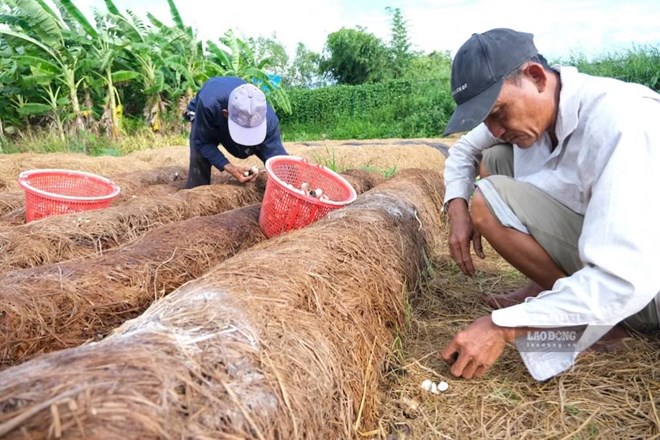
Reality shows that Vietnamese farmers are not afraid of change. From low-emission rice cultivation in the Mekong Delta to many organic agriculture and circular agriculture models in localities, it proves that producers are willing to apply new techniques when they help reduce costs, improve quality and sell at better prices.
In the context of the world establishing more and more “green barriers” to imported goods, the amendment of the Law on Environmental Protection is a preparatory step, creating motivation for Vietnamese agricultural products to adapt to the new game.
If we are slow to transform, we may lose our advantage right in markets that are strengths.
Conversely, if this opportunity is well utilized, Vietnam will not only reduce emissions or protect resources, but also increase the value of each grain of rice, fruit, coffee bean or shrimp in the international market.
Increasing economic value, that is the biggest driving force of green transformation.
Hoàng Văn Minh