
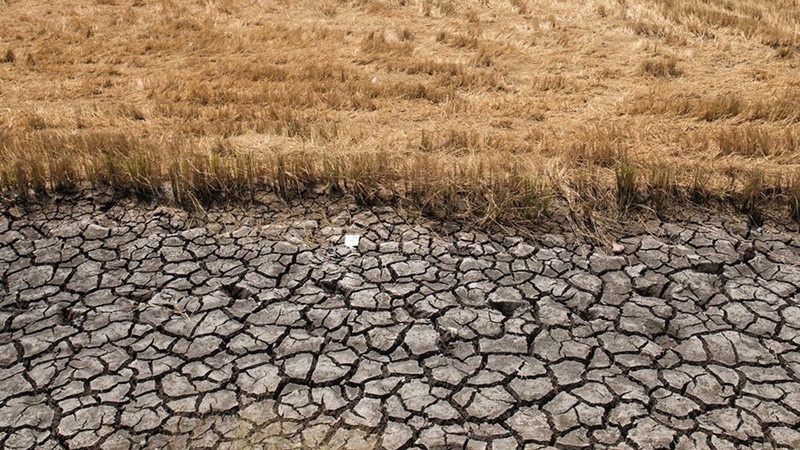
Under a strong El Nino, the central, Central Highlands and southern provinces are expected to be the areas most at risk of drought, water shortages and saltwater intrusion in late 2026 and early 2027.
As the South Central Coast, Central Highlands and southern provinces all have high water demand for production and daily life, the risk of drought, water shortages and saltwater intrusion could rise further.
Meanwhile, the number of storms and tropical depressions forming over the East Sea (South China Sea), and of those affecting Viet Nam, is expected to be below the long-term average.
However, this does not mean the risk of natural disasters will fall. Experience shows that even under El Nino conditions, powerful storms and extreme rainfall capable of causing heavy damage can still occur.
These warnings present a major test of the economy’s resilience to climate variability, as well as of how effectively policies are implemented and water resources managed.
As climate change puts growing pressure on water resources, it is essential to establish a unified management mechanism, ensure seamless data sharing and strengthen coordination among sectors and localities in the same river basin.
Areas frequently hit by drought and water shortages should also be reviewed regularly to guide early investment, infrastructure upgrades and the preparation of alternative water supply plans.
In particular, in river basins with many irrigation and hydropower reservoirs, data-sharing mechanisms and coordinated reservoir operations should be strengthened in the common interest.
Forecasts must be made early, and response plans prepared before shortages occur. When indicators of water availability decline, the responsible agencies must have enough data and authority to adjust operating plans and water allocation quickly and to mobilise supporting resources.
Early action to cope with El Nino is therefore not only an immediate task for the 2026-2027 dry season but also an opportunity to make water resource management more modern, transparent and adaptable to climate change.
Only when forecasts are turned into action, data systems are interconnected and responsibilities are fully met can the risk of water shortages be kept under control, helping to protect livelihoods, sustain production and ensure water and energy security.
The Prime Minister has also issued a directive on stepping up prevention of, and response to, natural disasters linked to El Nino in 2026-2027.
Under the directive, the Prime Minister called on ministries, agencies and localities to strictly follow the notice issued in July by General Secretary and President To Lam on preventing and controlling storms, floods and other extreme natural disasters, and on responding to climate change.
They were asked to put suitable measures in place early, based on actual conditions and local circumstances, to ensure a timely and effective response.
Tien Dat