
Emission control – an urgent requirement
According to a representative of the Hanoi Department of Construction, the low emission zone (LEZ) project is being built with specific criteria on scope, subjects of application, implementation roadmap and technical solutions suitable to actual conditions. The first phase is implemented in a pilot form, not applied simultaneously throughout the route.
Emission control focuses on cars and motorbikes – major sources of emissions in the inner city. Reality shows that Hanoi currently has about 7 million gasoline-powered motorbikes circulating regularly, creating great pressure on the air environment.
Dr. Hoang Duong Tung – Chairman of the Vietnam Clean Air Network – said that traffic is one of the main sources of pollution in urban areas. “Although each motorbike has a small capacity, with millions of vehicles, the total emissions are very large. Meanwhile, motorbikes currently do not have a strict emission control mechanism like cars,” Mr. Tung analyzed.
From an expert’s perspective, the implementation of LEZs is a necessary step. Not only does it help reduce emissions immediately, the policy also creates pressure to switch to clean vehicles, in line with Vietnam’s commitment to achieve net zero emissions by 2050.
International experience: LEZs are an inevitable trend
In the world, many major cities have deployed low-emission zones early and achieved clear results. In London, the Ultra Low Emission Zone (ULEZ) has significantly reduced NO2 and fine dust. Paris, Berlin or Tokyo have also applied forms of high-emission vehicle control, gradually eliminating fossil fuel vehicles from the center.
The common point of these models is to be implemented according to a roadmap, starting from the central area, then gradually expanding to the beltways. In parallel, strongly develop the public transport system and support people to convert vehicles.
Hanoi is following a similar direction. The roadmap is expected to expand the scope to Ring Road 2 by 2028, while limiting personal cars from using gasoline and oil. By 2030, the scope will continue to expand to Ring Road 3.
Many people support the policy
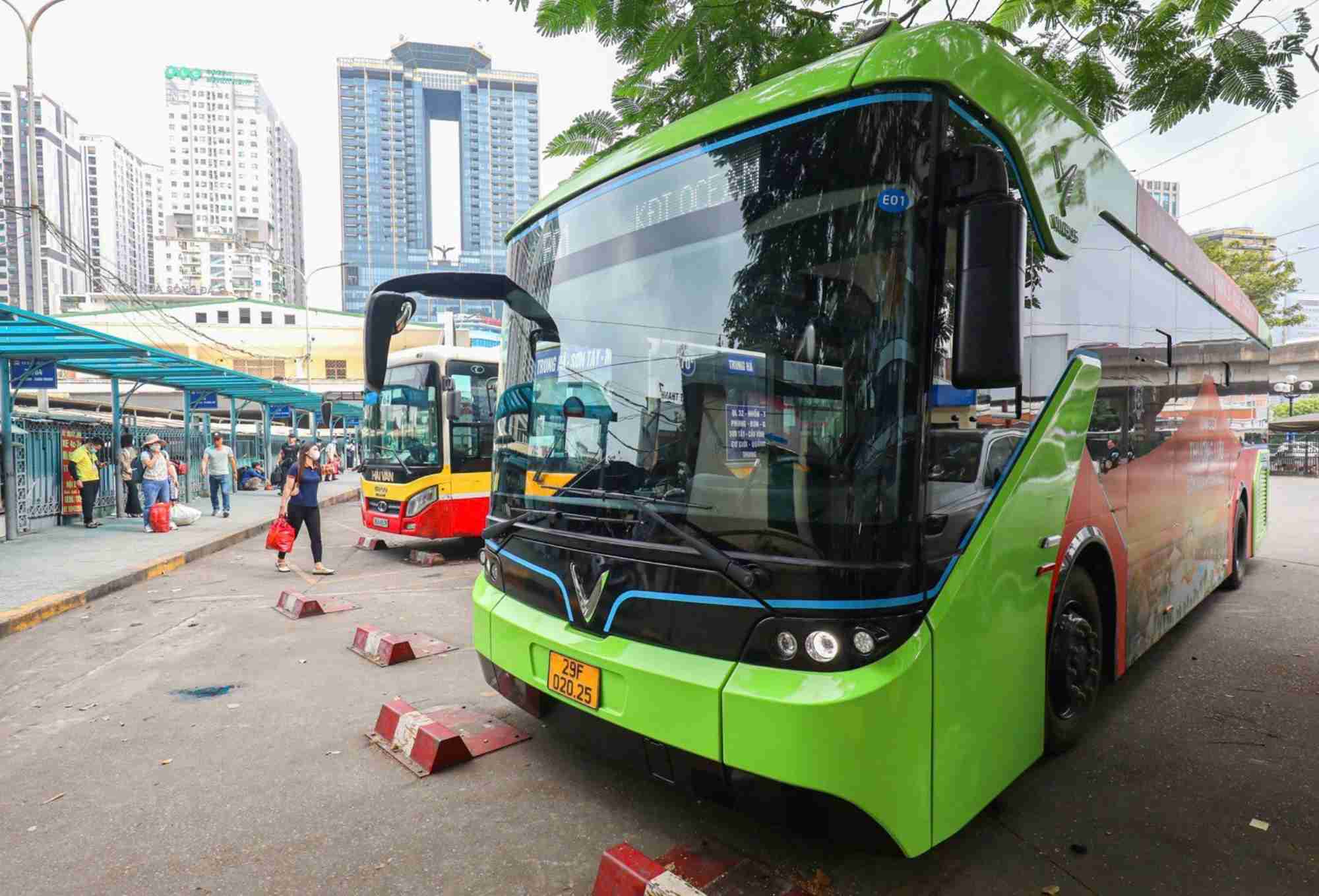
Real-world records show that many people have supported the policy of deploying low-emission zones. Some people have proactively switched to using electric vehicles, appreciating the dual benefits for the environment and costs.
Mr. Nguyen Van Hung, Dong Da ward, said that after switching to electric motorbikes, operating costs have decreased significantly compared to gasoline cars. “Every month I save a few hundred thousand VND on gasoline, not to mention the car runs smoothly, without smoke, without odor,” he said.
Meanwhile, Ms. Huyen Mai Thu, Ba Dinh ward, said that limiting gasoline vehicles in the inner city is an inevitable trend. “Hanoi’s air has been heavily polluted for many days. If there are no strong solutions, this situation will continue to prolong,” Ms. Thu shared.
To create broad consensus, Hanoi is also developing policies to support the conversion of vehicles using clean energy. Target groups will be classified to have appropriate support levels, minimizing the impact on people’s lives.
According to experts, the pilot LEZ from July 1, 2026 is an important starting step. However, to achieve efficiency, it is necessary to implement it drastically, synchronously and on schedule.
Dr. Hoang Duong Tung emphasized that Vietnam has committed to achieving net zero emissions by 2050, so emission reduction solutions must be implemented right now. “If delayed, the cost of overcoming will be much higher, not only economically but also in terms of public health,” he said.
In the context of air pollution becoming an increasingly urgent issue, Hanoi’s pioneering pilot of low-emission zones is not only of short-term significance but also a foundation for a long-term transition process.
From Ring Road 1 to Ring Road 3, from pilot to expansion, Hanoi is gradually shaping a green, clean, and sustainable urban model – where transportation is no longer a source of pollution but becomes part of the solution.
Xuyên Đông