
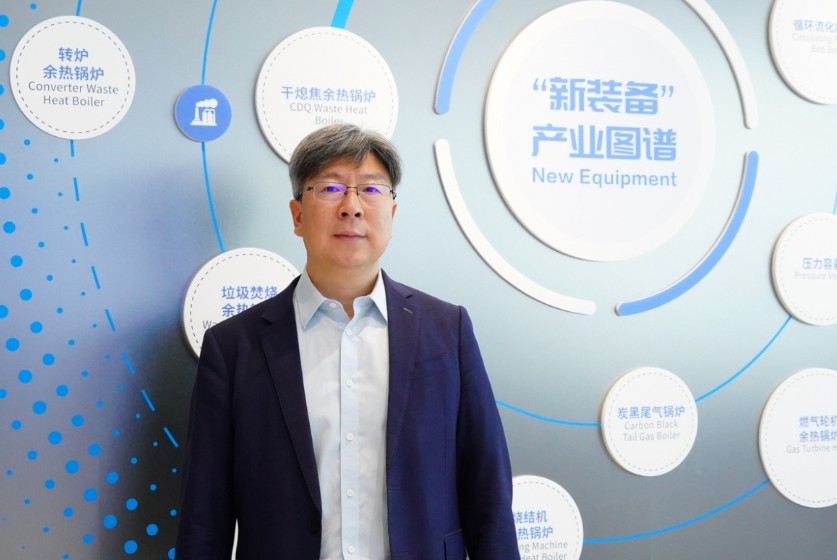
In a recent media exchange regarding green energy development in China, Liu Huimin, General Director of Xizi Clean Energy, a Hangzhou-based company, said the country’s green energy strategy in recent years has focused on key areas including solar power, wind power, energy storage, biomass energy, industrial waste heat utilisation and low-carbon technologies for heavy industries.
This is a suitable approach for large-scale emissions reduction in a highly industrialised economy, he added.
According to Liu, one of the technologies receiving particular attention in China as the country moves toward carbon neutrality by 2026 is solar thermal storage.
“Solar energy is a green technology with zero carbon emissions, so it can directly reduce emissions. At the same time, it is also a form of energy storage,”
“When energy sources such as solar and wind cannot be fully absorbed by the power grid, they can be temporarily stored here. When needed, the energy can be released again in the form of electricity or heat. This is an indirect way to reduce carbon emissions,” Liu said.
China’s experience in waste treatment and waste-to-energy generation has also drawn attention in Southeast Asia, including Vietnam.
China’s technological advantage lies in its complete supply chain and manufacturing system. “China has the world’s most complete supply chain and manufacturing system, enabling it to provide highly cost-competitive products and technologies to global markets,” he went on.
He added that China has carried out waste-to-energy projects of varying scales, allowing companies to build experience in handling different types of waste under different operating conditions.
For Vietnam, the goal of achieving carbon neutrality by 2050 has created an urgent need to modernise industrial plants, production facilities and energy infrastructure.
According to Liu, reducing emissions involves not only power generation but also electricity consumption.
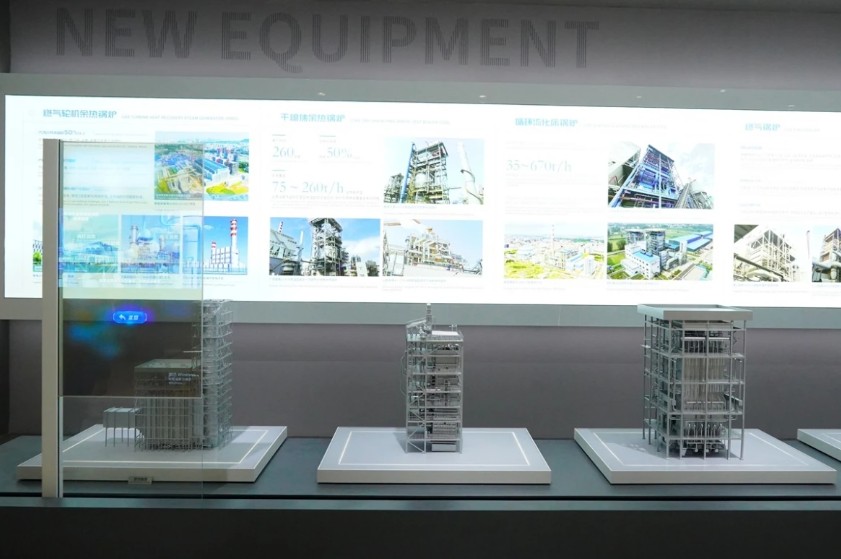
“In terms of energy use, we also have extensive experience. We have a national research institute for waste heat recovery boilers and have developed various boiler technologies that do not require coal or natural gas.
These technologies have been widely applied in energy-intensive industries such as steel and cement, helping companies reduce carbon emissions.”
Liu said cooperation prospects in Vietnam’s green energy sector are highly promising. “Vietnam is developing very rapidly. Its infrastructure, including upstream and downstream supply chain support capacity, is continuously improving,” he continued.
He noted that the main challenge is that Vietnam’s energy sector is still relatively young, therefore, its workforce and supporting industrial base may differ from China’s. However, these gaps can gradually narrow over time.
Looking ahead, Liu said the company has been involved in projects in Vietnam for nearly 20 years and is continuing to expand investment, with plans to possibly establish a branch in Vietnam in the future.
This shows that cooperation is moving beyond equipment exports toward longer-term market presence in line with local development needs.
As Vietnam pushes ahead with energy transition, cooperation with Chinese partners can support industrial modernisation, clean power infrastructure development, waste treatment and green technology supply chains.
Apart from economic value, energy cooperation between the two countries is also part of efforts to build a lower-carbon and more sustainable growth model.
(VOV.VN)